|
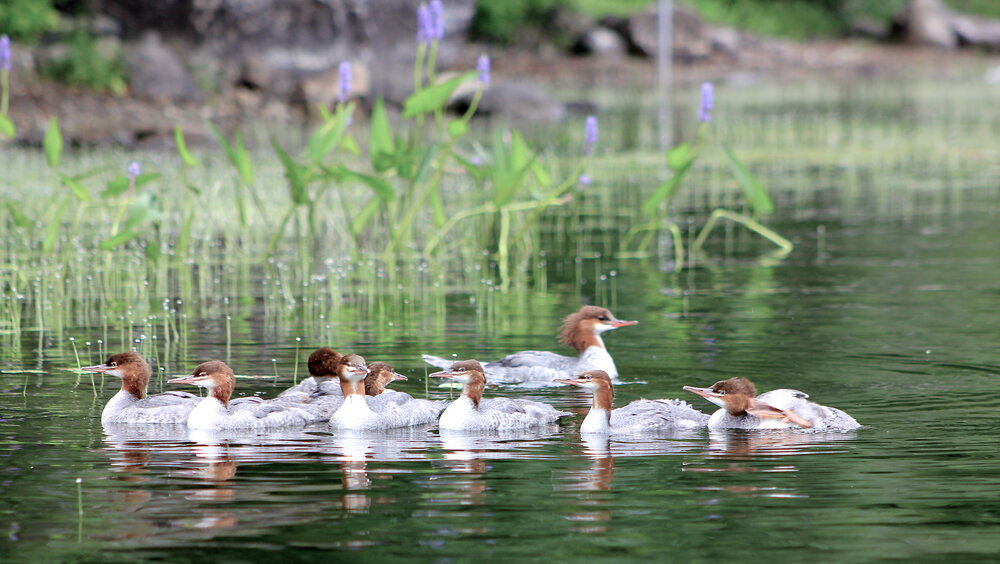
One of the delights of Paradox Lake is the wonderful wildlife. Several years ago in late July, this Common Merganser family of nine visited our shore on the lower lake. Common Mergansers are medium sized, highly social, diving ducks, weighing about 3 pounds. They breed from May- July and prefer nesting in tree cavities about 15-20 feet above ground. Sometimes these holes have been carved by large woodpeckers. They line the nest with down. They have also been observed using nest boxes, rock crevices, hollow logs, old buildings and chimneys. The Common Merganser is one of the most abundant species of waterfowl in the Adirondacks. They thrive in our clear northern lakes as they provide abundant food. The forests provide accessible nesting sites. The name merganser means diving goose. The British preferred name is goosander, meaning goose duck. They are known to many as the fish duck. They capture their prey with serrated bills. Males have large dark heads, coral red beaks, black backs and white breasts. The females have a reddish brown head. small white throat patch and a gray body. The hen incubates her eggs mid Spring, at which time the drake abandons her and undergoes a molt. So, in June sightings can be rare. Following 30-35 days of incubation the young hatch and are able to feed themselves almost immediately. A clutch is usually 8-11 eggs, but they are known for egg dumping. which can result in in broods of 15 young or more. Merganser hens often accept orphans. Sometimes a brood will be abandoned by a first time nesting hen and an experienced mom will take over. This shared daycare/nursery system is called a creche, a behavior known to occur in other bird species as well. It is suggested that combining the broods lowers the risk of predation, as there is safety in numbers. On Lake Bemidge in Minnesota a hen was observed to have 76 ducklings. A late spring may have been the cause of this as hens had delayed laying, and many had hatched at once. Groups observed are usually about half that size. Once hatched the hen will lead the young to shallow water , where food is abundant. They are not deep divers and can only hold their breath 20-30 seconds. Juveniles resemble females. They fly at 9-10 weeks. The first few weeks they eat aquatic invertebrates, insects, leeches, and tadpoles. They then switch to small fish.They are the only duck known to eat large amounts of fish. The young instinctively follow mom and may associate with other merganser families. They like to stay as close to their breeding grounds as possible, braving encroaching ice to dive for fish. It would be fun to hear about your experiences with the Common Merganser.
|